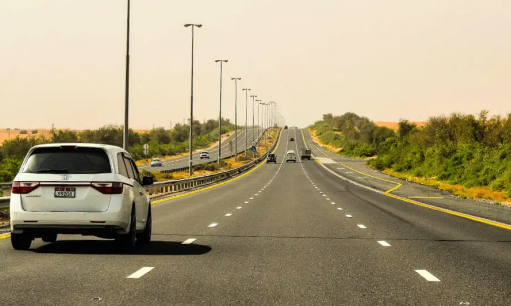
Planning Dubai to Abu Dhabi by road is one of the simplest ways to see more of the UAE in a single day—if you know what to expect. The drive is modern, well-signed, and generally smooth, but small details like tolls, speed limits, lane discipline, and peak-hour timing can make the difference between an easy cruise and a stressful trip.
If you need a vehicle before you go, start here: Dubai Rental Cars — it’s easiest to sort your car, documents, and pickup timing before you hit the highway.
Dubai to Abu Dhabi by Road: Quick facts you should know first
Dubai and Abu Dhabi are close enough for a spontaneous day trip, but far enough that preparation matters—especially if you’re new to UAE driving.
Key numbers (worth memorizing):
- Distance: roughly 140–160 km depending on your starting point in Dubai and destination in Abu Dhabi
- Typical drive time: about 1 hour 15 minutes to 2 hours (traffic-dependent)
- Main highways: E11 (Sheikh Zayed Road) and E311 (Sheikh Mohammed Bin Zayed Road)
- Road quality: excellent, high-speed multi-lane highways with frequent signage
- Biggest “surprises” for visitors: speed cameras, fast lane etiquette, and toll systems
A useful rule of thumb: if you’re heading from central Dubai to central Abu Dhabi during a weekday rush, plan for the upper end of the time range, and add buffer for exits and city driving once you arrive.
Best route for Dubai to Abu Dhabi by road (E11 vs E311)
Choosing the best route for Dubai to Abu Dhabi by road depends on where you start, where you’re going, and how much city traffic you want to deal with. Both highways are safe and straightforward, but they feel different.
E11 route (Sheikh Zayed Road): direct and familiar
E11 is often the “default” route because it’s the famous corridor running past major Dubai landmarks and continuing toward Abu Dhabi. It can be very convenient if you’re starting near Dubai Marina, JLT, Downtown, or areas connected to Sheikh Zayed Road.
Why drivers choose E11:
- Often feels more direct for many Dubai neighborhoods
- Easy connections to Abu Dhabi destinations along the coast and islands
- Clear signage and plenty of service areas
What to watch for: heavier congestion near key Dubai interchanges, especially during commuting hours.
E311 route (Sheikh Mohammed Bin Zayed Road): smoother flow, sometimes longer
E311 can be a smarter option if you’re coming from inland neighborhoods or want to avoid Sheikh Zayed Road bottlenecks. It can feel calmer in parts, with long stretches of steady driving.
Why drivers choose E311:
- Can reduce time lost in central Dubai traffic
- Good for drivers coming from outer Dubai areas
- Often steady cruising with fewer “city merge” hotspots
What to watch for: depending on your exact start/end points, it may add a bit of distance and require more navigation near your final Abu Dhabi approach.
A simple “route snapshot chart” (not a table)
- E11: generally “most direct” for central Dubai starts → fastest when Dubai traffic is light
- E311: generally “most consistent” for inland starts → less stop-start near central Dubai
Tolls and charges: what to expect on a Dubai to Abu Dhabi road trip
Tolls in the UAE are simple once you understand that Dubai and Abu Dhabi use different systems, and rules can change over time.
Dubai tolls (Salik)
Dubai has Salik toll gates. If your route begins on roads that pass through Salik points, you may be charged automatically. Rental cars commonly have tolls recorded and billed later—confirm the policy so you’re not surprised by admin fees.
Practical tip: ask your rental provider how tolls are billed:
- Are Salik charges included?
- Are they billed after return?
- Is there an admin fee per toll day or per transaction?
Abu Dhabi tolls (Darb)
Abu Dhabi uses Darb tolling on certain bridges/gates. In many setups, rental vehicles are registered through fleet systems and tolls are billed afterward, similar to Dubai.
Because toll policies can evolve, the safest approach is simple: assume tolls may apply, and keep a small budget buffer.
Speed limits, cameras, and driving style (this is the #1 thing to respect)
If there’s one “must-know” for driving from Dubai to Abu Dhabi, it’s that enforcement is real. Speed cameras are common, and lane discipline is taken seriously.
Speed limits and camera reality
Highway speed limits often range around 100–140 km/h depending on the road and section. Limits can change without much drama—one stretch may be faster, the next slower—so you should watch the posted signs rather than rely on memory.
Fact to keep in mind: UAE highways are known for frequent speed cameras, including fixed and mobile enforcement.
A quote many residents live by: “If you can see the speed camera, it can already see you.”
The left lane is not a “cruising lane”
On multi-lane UAE highways, the far-left lane is typically treated as the fast/passing lane. If a faster car approaches, it’s best to signal and move right when safe.
Good habits for a calm drive:
- Keep steady spacing and avoid tailgating
- Use indicators early (lane changes happen fast here)
- Don’t “camp” in the leftmost lane
Phone use and seatbelts
Don’t assume relaxed rules. Fines can be significant, and enforcement is common. As a general guide (amounts can change), penalties for phone use, no seatbelt, or unsafe lane behavior can be costly and may include black points.
Timing your Dubai to Abu Dhabi drive: when to leave to avoid traffic
Traffic can swing your trip from easy to exhausting. The highways move quickly, but the Dubai exits and Abu Dhabi entries can bottle up.
Heaviest traffic windows (typical patterns):
- Weekday mornings: Dubai outbound can be busy; Abu Dhabi inbound can also get commuter flow
- Weekday late afternoons/evenings: return traffic toward Dubai often builds
- Weekend late afternoon: popular return time after beach/mall/theme park trips
Simple planning rule: if you can, leave mid-morning and return after dinner to avoid the biggest spikes.
Fuel, rest stops, and what to pack for the road
The drive is not remote, but you’ll enjoy it more if you treat it like a proper road trip.
Fuel planning
Fuel stations are common. Still, it’s smart to:
- Start with at least half a tank
- Top up before entering heavy city traffic in Abu Dhabi if you’re low
- Keep a payment method that works easily (card/cash as needed)
Comfort and safety essentials
Bring:
- Water (especially in warmer months)
- Sunglasses (glare can be intense on open highway)
- A phone mount and charger (hands-free navigation)
- Your license, rental agreement, and insurance details
Deep but simple advice: desert driving isn’t “hard,” but the environment is unforgiving. Heat + a breakdown + no water becomes a real problem faster than people expect.
Navigation and city entry: arriving in Abu Dhabi smoothly
A common mistake is thinking the trip ends when you reach Abu Dhabi’s edge. In reality, the final 10–25 minutes can be the most confusing due to exits, islands, and city road layouts.
Plan your destination area first
Abu Dhabi is spread out across mainland and islands. Before you leave Dubai, confirm whether you’re going to:
- Corniche / downtown (city streets, more signals)
- Yas Island (often simpler highway access)
- Saadiyat (beach/cultural areas; specific bridge routes)
- Al Reem (high-rises; bridge access and ramps)
Helpful habit: open your navigation and preview the last 5 km of the route. That’s where missed exits happen most.
Parking expectations in Abu Dhabi (and avoiding fines)
Parking can be straightforward, but it’s more controlled in busy areas.
What to do:
- Use marked bays and read the signage carefully
- If you’re in a managed parking zone, pay promptly as required
- Keep your parking confirmation accessible until you leave
Common visitor mistake: assuming “quick stops” are fine without checking signs. In busier areas, enforcement can be consistent.
Rental car checklist for Dubai to Abu Dhabi by road (avoid hidden headaches)
If you’re using a rental, do this before you start the engine. It takes 3 minutes and can save hours later.
Before departure:
- Confirm toll billing method (Salik/Darb handling)
- Confirm insurance coverage and what incidents require reporting
- Check tires visually and ensure the spare/jack are present if applicable
- Photograph the car’s exterior (bumper corners, rims, windshield)
- Set up navigation before moving
During the drive:
- Keep the fuel level comfortable (don’t push “empty”)
- Take breaks if you feel tired—highway monotony is real
On return:
- Ask how tolls/fees will be charged and when you’ll see the final total
Final tips: making Dubai to Abu Dhabi by road easy and enjoyable
A Dubai to Abu Dhabi road trip is usually smooth when you respect three things: time, speed rules, and last-mile navigation. Leave with a buffer, drive to the posted limits, stay calm in fast traffic, and plan your destination area so you don’t miss exits near arrival. Do that, and the journey becomes part of the experience—not a hurdle you have to survive.