From manual tweaks to smart decisions
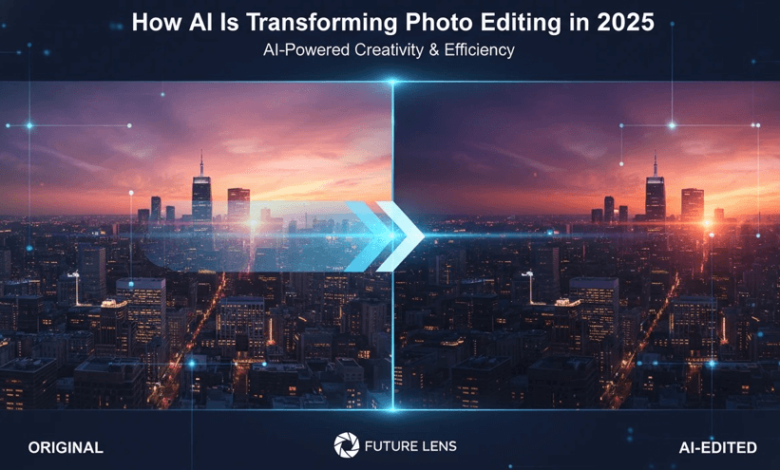
Open a typical editing project in 2025 and the first thing you notice is how little dragging of sliders is actually required. An image can be scanned in a split second, analyzed for subject, lighting, noise, and composition, and then presented with several intelligent variants tailored to different goals. A portrait gets one-click skin balancing and depth enhancement, while a product shot is offered in “catalog”, “social”, and “banner” styles, each tuned to a different format and level of detail.
This shift changes how people think about “editing”. Instead of micromanaging saturation or curves, creators describe an outcome: cleaner background, sharper subject, warmer mood. The system suggests a stack of edits as a starting point, which the user can approve, tweak, or reject in seconds. The real work becomes curatorial rather than purely technical, and that makes visual production accessible to people who never learned traditional photo workflows.
Backgrounds, distractions, and visual noise
One of the clearest examples of this change is background handling. What used to require careful masking around hair strands or product edges is now often a single click. An AI engine locates the main subject, traces precise contours, and separates it from the environment, even when there are overlapping objects or motion blur. Users can keep the original background, swap in a neutral gradient, drop the subject onto a branded color, or place it in a simple scene that matches the desired mood.
The same logic applies to small distractions. Stray cables on a desk, exit signs in the corner, or tourists in the distance can be painted out by selecting the region and letting a cleanup model rebuild the missing pixels. Instead of clone-stamping from nearby areas, the system understands context: it knows that a removed sign in a café should be replaced with wall texture and shadow, while a cleaned billboard in a cityscape might need building details or sky. This cuts revision time on commercial and social content from hours to minutes, especially when multiple variations of the same asset are needed.
Repairing and enhancing imperfect images
Not every photo starts in ideal shape. In 2025, people send in screenshots, compressed messenger images, low-light smartphone shots, and legacy photos taken on old devices. AI enhancement tools are trained to recognize the typical signatures of these flaws: color banding, heavy compression blocks, digital noise, or lens softness around the edges. By modeling how a cleaner version of the same scene should look, they reconstruct lost detail and balance exposure without creating the plastic, over-processed look that used to be common.
There is also a growing focus on accuracy rather than pure “prettiness”. For example, when a user uploads product images for an online catalog, enhancement models aim to preserve true color, correct geometry, and realistic texture. A shoe should not subtly change shade between shots, and a metallic surface should keep its natural reflections instead of turning into a flat gradient. This reliability encourages teams to rely on AI as a core part of their pipeline instead of a last-resort fix for only a few assets. Tools like Phototune are built around exactly this kind of practical, detail-oriented workflow.
Everyday stories, from solo creators to small teams
A single person running a small brand can now produce a full set of visuals alone: hero images for a website, lifestyle photos for social posts, and product cutouts for marketplaces. The same photo might go through several automatic passes—background removal, cleanup of text or date stamps, subtle sharpening—and come out looking like a studio shot even if it started as a quick capture in a living room. The owner does not need to know color theory or retouching tricks; prompts, presets, and natural language instructions guide the process.
Teams work differently too. Instead of passing giant folders of raw files between departments, they work from shared presets and AI recipes. A designer can define a “campaign look” once, and editors reuse it on hundreds of images with consistent results. Feedback loops shorten: someone can suggest “make the lighting moodier” or “tone down reflections on metallic surfaces” and see several automated versions before the next meeting. Over time, the system learns recurring preferences from these choices and starts offering matching suggestions immediately on upload.
From editing photos to generating new visuals
The final layer of transformation in 2025 is the blending of editing and creation. Image generation models no longer feel like a separate, experimental toy; they sit next to traditional tools and feed them content. A user can extend a cropped scene outward, asking the system to imagine the rest of the room while matching perspective and lighting. They can generate a set of backgrounds that share a consistent style and color palette, then drop existing photos into those scenes with automatic relighting.
Because of this, the boundary between “photo” and “visual asset” becomes blurry. A marketing image might start as a real product shot, gain an AI-generated environment, receive corrected reflections to match a fictional light source, and have text removed and re-added in a cleaner layout. To the viewer, it feels coherent and intentional, not obviously synthetic. Under the hood, a network of models collaborate: one finds the subject, another interprets the scene, another fills in missing content, and yet another refines the final details for sharpness and realism. This quiet collaboration is what truly defines AI photo editing in 2025.