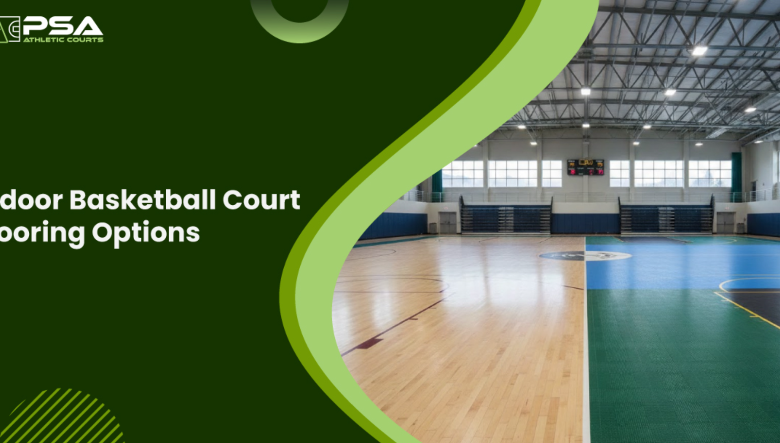
Indoor basketball courts are no longer limited to schools and professional arenas. Today, sports facilities, training academies, community centers, and even homeowners are investing in high-quality indoor courts. Choosing the right flooring is one of the most critical decisions in basketball court construction, as it directly affects performance, safety, durability, and long-term costs.
Interestingly, many pickleball court construction companies follow similar flooring evaluation principles, especially when designing multi-sport or indoor athletic facilities. Understanding the pros and cons of different flooring options can help owners make informed, future-proof decisions.
Below are six common flooring options for indoor basketball courts, along with their advantages and limitations.
1. Hardwood Sports Flooring
Best for: Professional courts, schools, elite training facilities
Hardwood typically maple is the gold standard for indoor basketball courts. It offers excellent ball response, consistent traction, and a professional playing experience.
Pros
- Superior ball bounce and grip
- Preferred for competitive play
- Long lifespan when properly maintained
Cons
- High upfront cost
- Sensitive to moisture and humidity
- Requires regular refinishing
Professional basketball court builders often recommend hardwood when performance is the top priority and climate control is reliable.
2. Synthetic Sports Flooring (Polyurethane or Vinyl)
Best for: Multi-purpose facilities and training centers
Synthetic flooring systems are gaining popularity due to their flexibility and lower maintenance needs. These surfaces are commonly used in modern indoor facilities.
Pros
- Shock-absorbing and joint-friendly
- Lower maintenance than hardwood
- Suitable for multiple sports
Cons
- Slightly different ball response compared to wood
- Can vary widely in quality
Many facilities working with pickleball court construction companies opt for synthetic systems because they transition well between sports.
3. Modular Sports Tiles
Best for: Temporary or convertible indoor courts
Modular tile systems are interlocking panels designed for quick installation and replacement.
Pros
- Fast installation
- Easy to replace damaged sections
- Moisture-resistant
Cons
- Less authentic feel
- Can be noisy under play
- Bounce consistency depends on subfloor quality
These systems are often used in recreational gyms or pop-up facilities rather than dedicated basketball venues.
4. Cushioned Rubber Flooring
Best for: Training facilities and indoor home courts
Rubber flooring prioritizes player safety and comfort, making it popular for fitness-focused environments.
Pros
- Excellent shock absorption
- Reduces injury risk
- Low maintenance
Cons
- Slower ball speed
- Not ideal for competitive play
For an indoor home basketball court, rubber flooring can be a practical choice when safety and noise reduction are key concerns.
5. Concrete with Sports Coating
Best for: Budget-conscious indoor facilities
Concrete slabs with specialized sports coatings are sometimes used where cost control is critical.
Pros
- Lower upfront cost
- Durable base structure
- Simple installation
Cons
- Minimal shock absorption
- Higher injury risk
- Requires resurfacing over time
Facilities considering this option should plan for long-term maintenance, including resurfacing solutions like those outlined in cost-effective indoor court resurfacing strategies.
See also: The Evolution of Online Gaming: From LAN Parties to Global Esports
6. Engineered Wood Systems
Best for: Clubs and schools seeking performance at a lower cost
Engineered wood combines layered construction with sports-grade finishes, offering a middle ground between hardwood and synthetic options.
Pros
- More affordable than solid hardwood
- Improved stability
- Consistent play characteristics
Cons
- Limited refinishing cycles
- Still sensitive to humidity
Experienced teams like Pine State Courts often recommend engineered systems for facilities that want professional performance without the full hardwood investment.
Why Flooring Selection Matters in Basketball Court Construction
Flooring impacts more than just play; it affects safety, acoustics, maintenance schedules, and long-term ownership costs. Professional basketball court construction projects factor in usage frequency, athlete age groups, climate control, and future resurfacing needs.
Working with a qualified basketball court designer ensures flooring choices align with both current needs and long-term facility goals. Specialists such as Pine State Courts integrate flooring decisions early in the design phase to avoid costly adjustments later.
You can explore their full approach to professional basketball court construction and surface planning through their dedicated design and materials guidance resources.
Multi-Sport Facilities and Shared Design Principles
As indoor sports facilities increasingly support basketball, pickleball, and other activities, surface selection must balance versatility and performance. This is why many pickleball court construction companies use similar flooring evaluation criteria focusing on durability, player safety, and maintenance efficiency.
Pine State Courts applies these cross-sport best practices to create indoor courts that perform reliably across different athletic uses.
Final Thoughts
Selecting the right flooring is a foundational decision in indoor basketball court projects. Each surface option offers unique benefits and trade-offs, and the best choice depends on budget, usage, and performance expectations.
Whether building a commercial facility or an indoor home basketball court, working with an experienced basketball court builder helps ensure the flooring system delivers long-term value, safety, and consistent play.
By understanding these six flooring options and partnering with knowledgeable professionals, facility owners can make confident, informed decisions that stand the test of time.